Across Montgomery and Bucks counties, winter is when it’s easiest to check hemlocks for woolly adelgid. Knowing how to tell if your hemlock has woolly adelgid requires a close look, since scale insects, spider egg sacs, and winter burn can all look like woolly adelgid.
Left untreated, adelgid can gradually kill a hemlock over several years, so catching it early gives an arborist time to treat a tree before it declines.
Key Takeaways
- White fuzzy stuff at the base of the needles on the underside of the twig is the classic sign of woolly adelgid, with tiny black adelgids hiding under the wax.
- Elongate hemlock scale, spider egg sacs, and winter burn can all mimic woolly adelgid, and the scale often shares a tree with it.
- Needle drop, thin twig growth, and dieback are the signs a hemlock tree is dying, and untreated decline takes several years to more than a decade.
- Winter is the easiest time to look, but it falls between the best treatment windows of late September to October and early spring.
- Photograph the whole tree, the lower branches, and the twig underside, and confirm the cause before deciding whether to monitor it or call a professional.
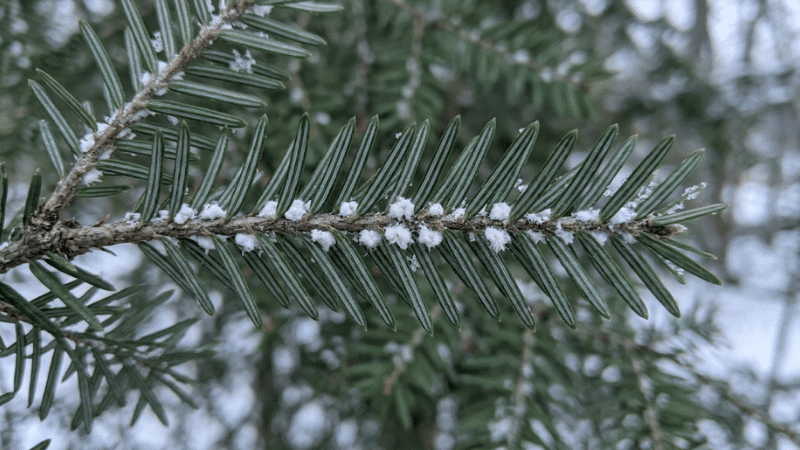
The wax attaches to the twig, not the needle, and old wool alone does not prove an active infestation.
How Do You Tell If Your Hemlock Has Woolly Adelgid?
Hemlock woolly adelgid looks like small white wax masses at the base of the needles on the underside of the twig. Keep an eye out for the following confirming details:
- Wax: The masses look like cotton swab tips and attach to the twig, not the needle.
- Insect: Black, oval, soft-bodied overwintering adelgids sit under the wax. They are Adelges tsugae, the insect behind an HWA infestation.
- Old Wool: The wax persists into the next year even after the insects die, so old wool alone does not prove an active infestation. Check the undersides of several twigs for black females and for decline in new growth.
Look-Alikes to Rule Out
There are a couple of things that are commonly mistaken for woolly adelgid. So, be mindful of where the material sits on the branch, since that can help you tell them apart:
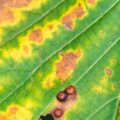
- Elongate Hemlock Scale: Flattened yellow-brown to orange covers (smaller white ones on males) on the lower surface of the needles, not at the twig
- Spider Egg Sacs: Silky or fabric-like rather than waxy and wispy, and not tied to the twig underside
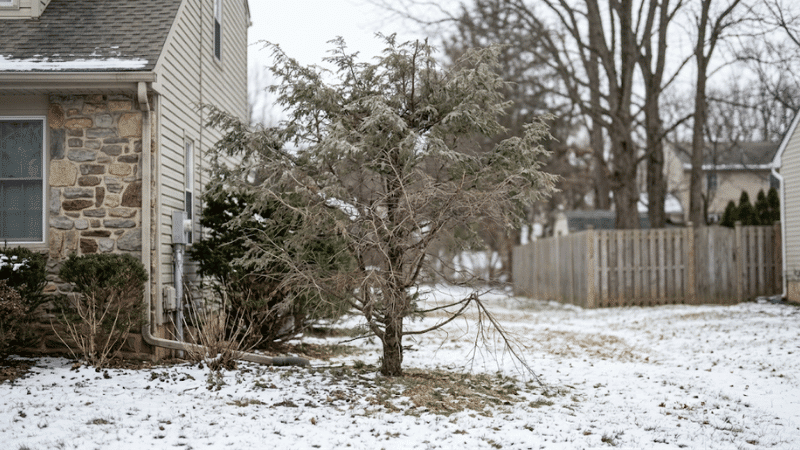
Decline often starts with the lower branches and can take several years.
What Are the Signs of a Dying Hemlock?
The decline of a dying hemlock is a gradual process that tends to start with the lower branches, and adelgid is one of a few possible causes. Severe adelgid infestations show up in the following ways:
- Needle Drop: Needles fall early.
- Thin Growth: Twig growth is reduced.
- Dieback: Branches die back, and severe cases can kill the tree.
- Gray-Green Crown: Heavy infestations can tint the crown a dull gray-green from a distance.
Winter burn can look similar, as it causes brown or red-brown needles over large areas of the crown and is driven by swings in temperature, wind, and inconsistent snow cover. While it can be minor, it can also cause dieback and even plant death. If you want to learn more about how weather can stress evergreens, check out our blog on winter burns and tree stress.
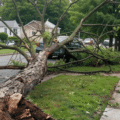
GOOD TO KNOW: If it isn’t treated, hemlock woolly adelgid can kill a hemlock in about 4 to 15 years. In 2023, it was found in every county in Pennsylvania, which means no hemlock is untouchable. If a hemlock near your home is dying or dead, it’s a storm hazard. At that point, it may be worth considering tree removal.
When Is the Best Time to Check for Hemlock Woolly Adelgid Symptoms in Pennsylvania?
In Pennsylvania, the best time to check your hemlocks for symptoms of woolly adelgid is winter, since the egg masses are most apparent and the symptoms are easiest to see. The insects stay active through the winter, which is why it’s a good time to check. The timing follows the life cycle:
- Late Winter to Early Spring: Females begin laying eggs.
- Early April to Late June: Eggs hatch.
- Late September: Nymphs resume feeding and develop into the overwintering adult females.
Our winter pest evaluation blog post provides additional coverage on this winter pest detection window for other tree pests.
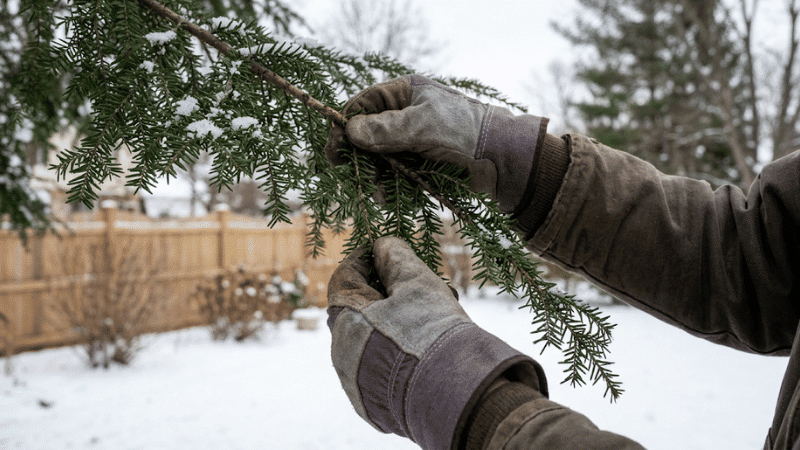
Photograph the whole tree, the lower branches, and a close-up of the twig underside.
What Should You Do If You Find Hemlock Woolly Adelgid on Your Property?
If you think you found hemlock woolly adelgid on your property, you should confirm the cause first, then document what you see. Start with these steps:
- Photograph the whole tree, the lower branches, and a close-up of the underside of a twig.
- Compare the photos to all look-alikes.
- Do not move hemlock plants from an infested property to other sites, because moving infested ornamental hemlocks has started new, isolated infestations.
Treatment Timing
Plan treatment for the right season instead of just reacting in the middle of winter. In Pennsylvania, the best treatment window is late September to October, since it targets overwintering females. Soil injection can also work in early spring when the soil is adequately moist. A spray in mid-to-late June may also reduce developing nymphs.
When to Monitor vs. Call an Arborist
If there’s only old wool on the twigs, no black females, and normal new growth, you can just keep an eye on it over time. If you can confirm there’s active adelgid, or you’re not sure what you’re seeing, call an arborist who can treat in the next window and check new growth a year or two later to see whether it worked.
Large trees and sites near water, especially, need a professional, since soil treatments shouldn’t be used near streams and ponds, and large trees tend to need a licensed applicator for thorough coverage.
When you contact Clauser Tree Care, we start with a plant health care assessment and build a treatment plan through our insect and disease management service. We also provide ongoing care through our plant health care program.
Frequently Asked Questions About Hemlock Woolly Adelgid
How long does treatment protect a hemlock?
Imidacloprid soil treatment can protect a hemlock for several years, but results vary with the product, tree, and site, so an arborist should set the retreatment schedule. Either way, treated hemlocks need treating again later.
Will my hemlock recover after treatment?
Many do, especially when treated before heavy dieback. In one residential study, treated hemlocks regrew new foliage, even trees that already had dieback, while untreated trees stayed sparse and declining. Severely damaged trees recovered more slowly, taking up to about three years to look close to healthier trees.
Should I fertilize an infested hemlock?
No. Nitrogen fertilizer boosts adelgid numbers, so infested hemlocks should not be fertilized with nitrogen. Wait until the infestation is under control before feeding the tree.
How long has woolly adelgid been in Pennsylvania?
It was reported in southeastern Pennsylvania by the late 1960s, so it is not a new arrival here and has had decades to spread.
Clauser Tree Care Can Assess and Treat Your Hemlocks
We help people across Montgomery and Bucks counties protect their hemlocks from woolly adelgid. Contact us about our insect and disease management service to make sure your trees are checked and have a treatment plan put in place. You can request a free quote online, too!
About Clauser Tree Care
From who you talk to on the phone in our office, to our courteous and experienced work crews who provide your service, all of the hard-working team members at Clauser Tree Care strive for complete client satisfaction. Our job is simply not done until you are pleased with the experience that you have had working with our company. Founded more than 25 years ago on the principles of honest work and arboricultural best practices, we strive for a higher standard of care for a greener future.