You installed a patio, driveway, or pool three summers ago. Your tree looked fine for years. Now branches are dying, the canopy is thinning, and you’re wondering why.
This scenario plays out regularly in Warrington, Chalfont, Doylestown, and across Bucks and Montgomery Counties — homeowners discover that construction damage to trees often remains invisible until years after the project ends. The problem is straightforward: root damage happens underground, equipment operators never see the destruction, and by the time symptoms surface, homeowners have forgotten about the renovation entirely.
Key Takeaways
- Construction damage to tree roots is often invisible during the project but surfaces 2–5 years later as branch dieback and canopy thinning.
- Soil compaction, root cutting from trenching, and grade changes are the most common damage mechanisms — even a single equipment pass can cause lasting harm in clay-heavy soils common in our region.
- Many construction-damaged trees can be recovered with professional air spading, strategic fertilization, and ongoing monitoring, rather than removal.
- Consulting an arborist before your project starts is the most cost-effective way to protect trees you want to keep.
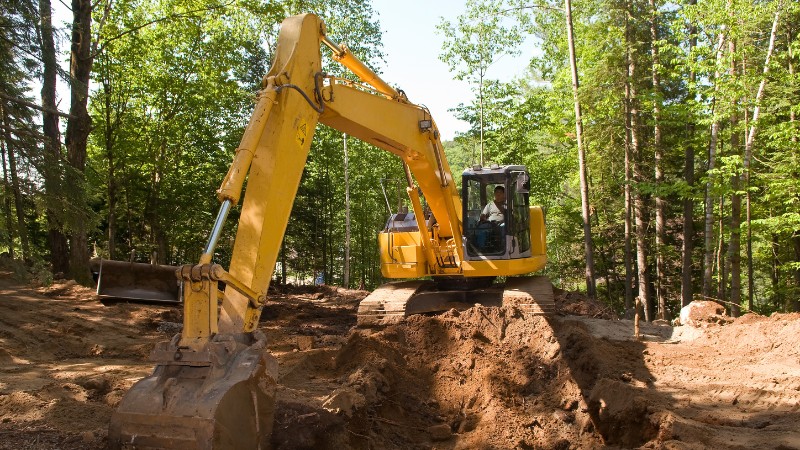
A single pass of heavy equipment compresses soil pore space dramatically, suffocating fine roots even when the tree appears unharmed for years after.
Why Is Construction the Most Overlooked Cause of Tree Decline?
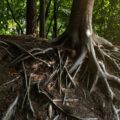
Construction is the most overlooked cause of tree decline in suburban neighborhoods across Upper Bucks and Montgomery Counties because root damage happens underground, where no one sees it. Tree roots extend far beyond the canopy drip line — the most active are typically in the top 12–18 inches of soil, right in the impact zone of excavation, compaction, or fill work. Damage to these roots happens instantly but remains invisible at the surface during and after the project.
This creates a dangerous time gap. Trees initially mask root loss by drawing on stored energy reserves. Years pass — and by then homeowners have completely forgotten about the patio installation or driveway extension. When the tree finally begins to decline, they assume it’s aging naturally or unhealthy from some mysterious cause. The connection to the construction project never occurs to them.
In actively developing communities, like Warrington, Chalfont, and Horsham, home renovations are constant: patios, pools, additions, utility trenches, and grade changes are routine. Each project introduces risk to the root zone — risk that is entirely preventable with planning and professional guidance.
How Do Home Improvement Projects Damage Trees?
Construction damage happens through three primary mechanisms, each of which can severely compromise tree health.
Root Compaction from Heavy Equipment
A single pass of a skid steer loader, delivery truck, or backhoe across the root zone compresses soil pore space dramatically. Clay soils, common in Upper Bucks County, are particularly vulnerable because clay particles pack tightly together once compressed, leaving almost no room for air or water movement.
When clay soil becomes heavily compacted, water, oxygen, and nutrients can no longer move through the soil to the roots. Fine roots suffocate and can’t absorb what they need, even when those resources are available at the surface. Because the tree compensates with stored reserves, symptoms don’t appear until 3–7 years later — well past the window for early intervention.
Root Severing from Trenching
Utility lines, footings, French drains, irrigation systems, and deck supports all require digging within the critical root zone. Severed roots cannot heal or regenerate — the tree permanently loses access to water and nutrients from that section of the root system.
Shallow trenching is especially damaging because most active fine roots live in the top 12–18 inches of soil, directly in the path of even routine excavation. If 20–30% of the critical root zone is damaged through trenching, the tree’s long-term viability is compromised.
Grade Changes
Changing the soil level around a tree affects the root system in several ways:
- Adding fill soil (even 2–3 inches) over roots reduces oxygen availability and kills fine roots by cutting off the gas exchange they depend on
- Removing soil exposes roots to drying, temperature extremes, and physical damage from foot traffic and mowing equipment
- Both scenarios alter drainage patterns, blocking or redirecting the water access roots rely on
Grade changes are often the most insidious damage because homeowners don’t realize how little fill is needed to cause lasting harm.
What Does Construction Damage Look Like Years Later?
Understanding the symptom timeline helps homeowners recognize their tree in this scenario — and understand why the connection to a past project is so easy to miss.
Year 1: Often Nothing Visibly Wrong
The tree looks healthy. Leaves are normal size, the canopy is full, growth appears fine. This is deceiving: the tree is running on stored energy reserves that mask even severe underground damage for a full growing season or longer.
Years 2–3: Subtle Decline Begins
Gradual changes surface, often slowly enough that homeowners attribute them to weather or normal aging:
- Smaller leaves
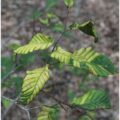
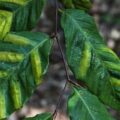
- Canopy thinning near branch tips
- Earlier fall leaf drop
- Reduced new growth
- Weakening branch tips
These symptoms are easy to dismiss — which is exactly why construction damage goes undiagnosed.
Years 3–5: Major Branch Dieback and Secondary Invaders
Major branches at the crown begin to die back. Secondary problems follow as bark beetles, canker fungi, and wood-decay organisms exploit a weakened tree.
These secondary invaders don’t cause the original damage, but they compound it rapidly. A tree that might have recovered with early intervention becomes increasingly difficult to save once secondary pests establish a foothold.
The decline becomes cyclical. Visible decline attracts pests and diseases that a healthy tree would resist. They feed on the decline, creating a compounding crisis that closes the window for effective recovery.
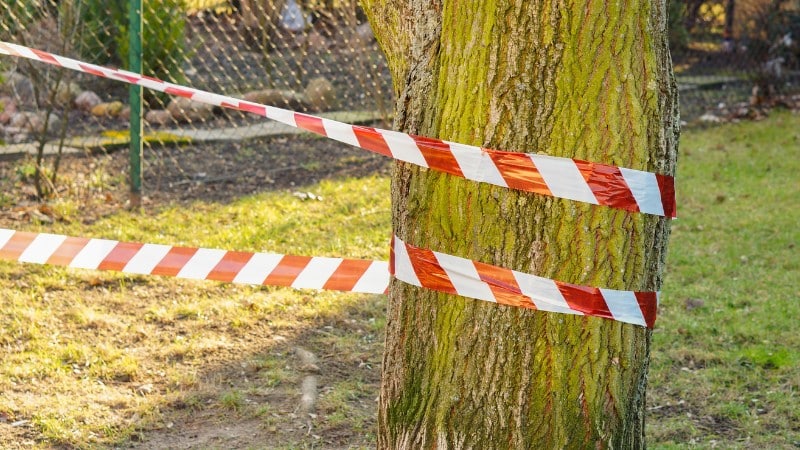
Tree protection fencing marks the critical root zone boundary—the most cost-effective insurance against invisible root damage.
How to Protect Your Trees During Your Next Project
Prevention is far cheaper and more effective than remediation. If you’re planning a renovation near trees you want to keep, these steps protect them.
Know the Critical Root Zone
The rule of thumb is simple: protect a radius equal to 1 foot for every 1 inch of trunk diameter at breast height (measured 4.5 feet above ground). For example, a 20-inch-diameter oak tree needs a 20-foot protection radius. This isn’t arbitrary — it reflects where most of the tree’s active roots are located.
Then, install tree protection fencing at the critical root zone boundary before any equipment arrives on site. Fencing is inexpensive insurance; moving it later or removing equipment from compacted soil does not undo the damage.
Consult an Arborist Before the Project Starts
This is the single most important step. A pre-project arborist assessment identifies which trees are at highest risk and which trees can tolerate minor work nearby. More importantly, an arborist can specify protection measures in writing for your contractor to follow. This documentation prevents misunderstandings and protects both you and the contractor.
Communicate Tree Protection to Your Contractor in Writing
Put tree protection requirements in your contract, such as fencing boundaries, no material storage within the critical root zone, no equipment parking, no foot traffic. If trenching is unavoidable near trees you want to keep, require hand-digging or air spading within the root zone to minimize root cutting.
Before signing a contract, verify your township’s tree protection requirements. Doylestown Borough, for example, requires removal permits for any tree 6 inches or greater in diameter — check your local ordinance before assuming a tree can be safely removed if the project conflicts.
Can a Construction-Damaged Tree Be Saved?
Not every construction-damaged tree is worth saving, but many are — if diagnosed and treated before decline progresses too far.
Professional Assessment Is the First Step
An arborist evaluation determines the extent of root damage and whether recovery is realistic. It prevents two costly mistakes:
- Removing trees that still have a good chance of survival
- Spending money on remediation for trees already too compromised to recover
An honest, on-site evaluation tells you exactly what you’re working with before any treatment dollars are committed.
Root Zone Recovery Through Professional Remediation
If recovery is viable, several techniques restore function to damaged root zones:
- Air spading uses compressed air to break up compacted soil around surviving roots without cutting them, restoring pore space for water, oxygen, and nutrients
- Deep root fertilization delivers essential nutrients directly to the root zone, giving the tree resources to regrow damaged root systems
- Plant health care monitoring catches secondary problems — pests, disease, stress-related decline — before they accelerate the situation
As the tree stabilizes, pruning out dead branches removes decay entry points and reduces the structural load on a root system that’s still rebuilding — an important step that’s easy to overlook during recovery.
Recovery takes 2–3 growing seasons, but many trees that receive professional care in time do bounce back.
When Removal Is the Right Choice
Sometimes root damage is too extensive, or the tree has become a structural hazard. A tree that has lost more than 50% of its critical root zone or shows advanced structural decline should be evaluated for removal — and assessed separately for whether it has become a hazardous tree requiring prompt action.
Removing a tree in this condition prevents injury and property damage, and opens space to plant a tree that will thrive.
When to Call a Professional Arborist
Call an arborist in these situations:
- Before any construction or renovation project near trees you want to keep. This is your best defense against hidden damage and costs far less than remediation 3–5 years later.
- When you notice decline in trees near past construction, even if the project was years ago. Professional diagnosis can confirm whether construction is the cause, and early treatment improves recovery odds significantly.
- When a tree that “was always fine” suddenly starts showing stress symptoms you can’t explain. Early diagnosis is critical; waiting often means missing the window for effective recovery.
Professional arborists bring expertise in root zone protection, remediation techniques like air spading and vertical mulching, and ongoing monitoring through plant health care programs. This expertise saves you money and prevents heartache.
GOOD TO KNOW: Clauser’s Good, Better, Best Tree & Shrub Care programs support stressed trees with regular visits and seasonal treatments designed to strengthen root systems, improve resilience, and identify developing problems before decline accelerates.
Frequently Asked Questions About Construction Damage to Trees
How far from a tree should protection fencing be?
Install tree protection fencing at least 1 foot of radius for every 1 inch of trunk diameter. For example, a 20-inch-diameter tree should have a 20-foot protected root zone. Consult a local arborist before starting work, as local ordinances may add additional requirements.
Can a tree survive having its roots cut?
Trees can survive minor root damage but cutting more than 20–30% of the critical root zone can seriously compromise long-term health. If trenching near trees is unavoidable, techniques like air spading help reduce root damage.
How long after construction do trees show damage?
Construction damage often takes 2–5 years to appear. Trees may look healthy before symptoms such as canopy thinning, branch dieback, and slow growth become visible.
Is it worth trying to save a construction-damaged tree?
Many trees can recover with professional remediation, such as air spading, deep root fertilization, and ongoing monitoring. Recovery takes 2–3 growing seasons, but saving a mature tree is often worth the investment compared to removal and replanting. An arborist assessment determines if recovery is realistic for your specific tree.
How much soil can you add over tree roots?
Even 2–3 inches of fill soil over roots can reduce oxygen and damage fine roots. If you must raise the grade around a tree, use permeable pavers, raised walkways, or suspended decks that minimize soil contact with the root zone.
What should I check before my next home improvement project?
Check your township’s tree protection ordinances because requirements vary by jurisdiction. Identify which trees you want to keep, schedule an arborist assessment before the project starts, and get protection specifications in writing to your contractor to ensure compliance.
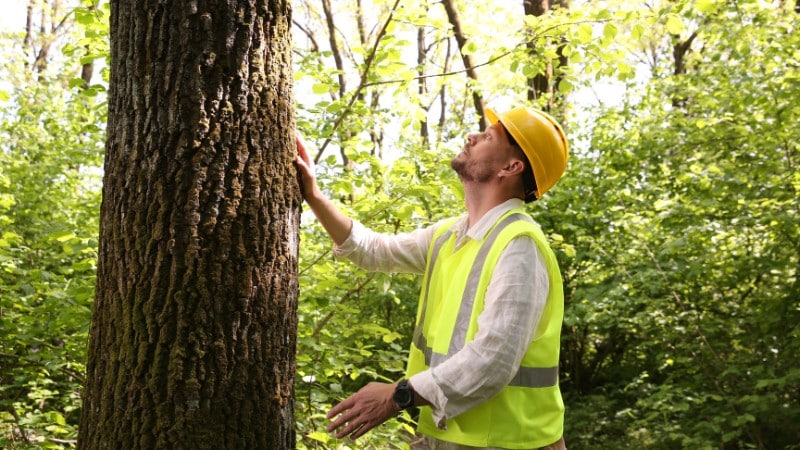
A professional arborist assessment determines the extent of root damage and whether recovery is realistic—the critical first step before spending money on treatment.
Get Expert Help for Construction-Damaged Trees from Clauser Tree Care
Construction damage is one of the most common and overlooked causes of tree decline in Upper Bucks and Montgomery Counties. Because symptoms may not appear for years, homeowners often don’t realize a declining tree was damaged during a past renovation project.
The good news is that many construction-damaged trees can recover with professional treatment. The key is prevention: a pre-project arborist consultation is far cheaper and more effective than remediation years later.
If you’re noticing decline in trees near past construction or planning a project near trees you want to keep, schedule a professional assessment. Early action can make all the difference. Call us today at 215-542-8291 or request a free quote online.
About Clauser Tree Care
From who you talk to on the phone in our office, to our courteous and experienced work crews who provide your service, all of the hard-working team members at Clauser Tree Care strive for complete client satisfaction. Our job is simply not done until you are pleased with the experience that you have had working with our company. Founded more than 25 years ago on the principles of honest work and arboricultural best practices, we strive for a higher standard of care for a greener future.