Not every leaning tree is dangerous, and not every dangerous tree looks obvious. In neighborhoods across Montgomery and Bucks Counties, homeowners often notice changes in their trees and wonder whether they’re seeing a real safety concern or a normal response to age, weather, or growing conditions.
Leaning trunks, surface cracks, and dead branches can look alarming, but they don’t always signal imminent failure. Knowing which conditions are harmless and which ones deserve closer attention helps homeowners avoid unnecessary removals while still addressing genuine safety risks.
Key Takeaways
- Structural defects, proximity to targets, and potential for damage are priorities for determining whether a tree is hazardous.
- Critical warning signs include trunk cracks, dead hanging branches (“widow makers”), sudden leaning after storms, fungi growth, and pest infestation signs like emerald ash borer exit holes.
- Many concerning conditions are harmless, such as surface bark damage, natural age-related hollowing, gradual lean development, seasonal leaf changes, and lichen growth.
- Pennsylvania’s most problematic species are silver maples, Bradford pears, ash trees, and Norway maples.
- Professional assessment saves money, as expert evaluation can reduce unnecessary removal costs.
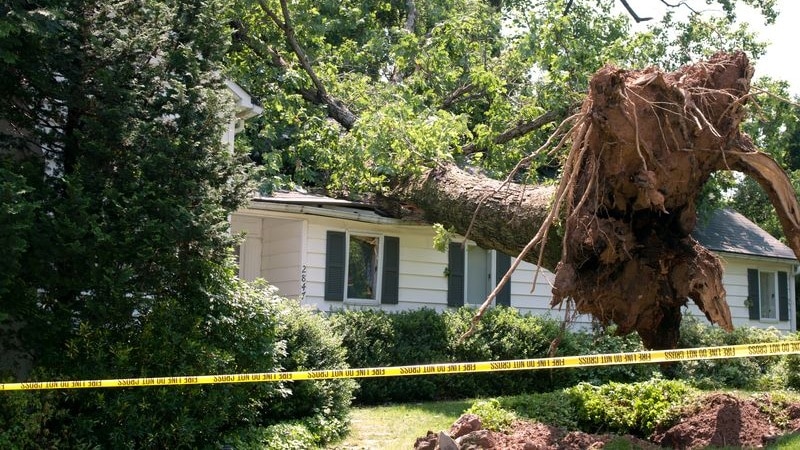
Emergency tree removal situations like this require immediate professional response to prevent further damage and ensure safety.
What Makes a Tree Hazardous to Your Property?
A hazardous tree isn’t simply one that looks unhealthy or has some dead branches. According to the USDA Forest Service definition, a hazard tree requires three specific factors:
- A structural defect or condition that increases failure likelihood
- Proximity to potential targets
- The presence of people or property that could be damaged if failure occurs
Think of it like a three-legged stool. Remove any one element, and the “hazard” designation disappears. A perfectly healthy tree growing too close to your house becomes hazardous during severe weather. Conversely, a tree with significant defects poses minimal risk if it’s located in a remote corner of your property away from structures, utilities, and high-traffic areas.
In our experience working throughout Montgomery and Bucks Counties, we’ve found that many homeowners focus exclusively on tree condition while ignoring location factors. The 40-year-old oak with some minor deadwood near your garden shed requires a different level of urgency than the same tree hanging over your home’s main entrance. Environmental stressors can accelerate the development of structural weakness. These stressors in Southeastern Pennsylvania include:
- Clay soil
- Construction damage
- Freeze-thaw cycle
PRO TIP: Not every imperfect tree represents an immediate danger. Professional assessment considers all three factors together, often revealing that trees homeowners consider “dangerous” are actually manageable through proper pruning, cabling, or other treatments.
What Are the Warning Signs of a Dangerous Tree?
When evaluating trees on your property, these critical warning signs warrant immediate professional attention. For comprehensive guidance on conducting your own preliminary tree inspection, Penn State Extension provides detailed resources for inspecting trees for hazards.
There are three main focuses we consider for determining how dangerous a tree is: structural issues, health indicators, and root problems.

Codominant stems create weak attachment points that become especially dangerous under snow and ice loads during Pennsylvania winters.
Structural Issues
- Cracks, splits, or cavities in the main trunk, especially those that extend deep into the tree
- Dead, hanging, or broken branches (“widow makers”) anywhere in the canopy
- Multiple trunks with weak V-shaped connections that lack proper attachment
- Sudden leaning, particularly after storms or during wet soil conditions
Health Indicators
- Mushrooms or fungi growing on the trunk, root flare, or major roots (often indicates internal decay)
- Sparse canopy development or premature leaf loss during the growing season
- Signs of serious pest infestation, including carpenter ant activity or emerald ash borer D-shaped exit holes
Root and Soil Problems
- Exposed or visibly damaged root systems from construction or grade changes
- Soil heaving around the base indicates root movement
- Standing water or poor drainage around the tree base
Remember, approach damaged trees with extreme caution. Never walk directly under trees with hanging branches or obvious structural damage. Even seemingly minor storm damage can create unstable conditions that worsen quickly.
How to Tell Normal Tree Changes from Real Safety Risks
Many Pennsylvania homeowners unnecessarily worry about conditions that appear threatening but actually pose minimal risk. Understanding these common misconceptions can save you significant money on premature tree removals.
Surface-Level Bark Issues vs. Structural Problems
Minor bark damage from lawn mower impacts, small woodpecker holes, or surface-level injuries rarely compromise a tree’s structural integrity. While you should try to protect your trees from this kind of damage, as it can lead to insect infestations, it is not life-threatening by itself.
We regularly assess trees in Horsham and Chalfont with cosmetic bark damage that homeowners assume requires removal. In contrast, deep cavities that penetrate into the heartwood or cracks that extend through significant portions of the trunk warrant serious concern.
The key difference lies in depth and extent. Surface wounds typically heal over time through the tree’s natural compartmentalization process, while structural damage that affects load-bearing wood poses genuine risks.

Advanced trunk decay like this hollow oak poses serious safety risks and typically requires professional removal to protect property and lives.
Natural Age-Related Changes
Mature trees throughout Montgomery and Bucks Counties naturally develop characteristics that worry homeowners but don’t make removal necessary. Hollow trunks in old oaks, for example, often maintain structural soundness because the living wood exists in the outer sapwood layers. We’ve assessed numerous century-old trees with significant hollow cores that remain perfectly stable.
Similarly, gradual branch loss in aging trees represents normal senescence, not structural failure. Natural crown thinning allows trees to shed unnecessary weight and reduce wind resistance, actually improving stability in many cases.
Harmless Lean vs. Dangerous Movement
Trees that develop gradual leans over decades typically establish compensating root systems and reaction wood to maintain stability. The willow oak in your Blue Bell neighborhood that’s leaned 15 degrees for twenty years poses minimal risk compared to a tree that suddenly tilts after a recent storm.
We distinguish between developmental lean (gradual adaptation to environmental conditions) and failure-indicating lean (sudden movement suggesting root or trunk problems). The timing and context make all the difference in risk assessment.
Seasonal Variations Homeowners Misinterpret
Pennsylvania’s distinct seasons trigger natural responses in trees that inexperienced observers often mistake for health problems. Early leaf drop during drought stress, delayed spring budding after harsh winters, or temporary wilting during heat waves rarely indicate structural hazards.
Additionally, lichen growth on bark – those gray-green crusty patches – represents a harmless symbiotic relationship, not tree disease. Lichens actually indicate good air quality and have no negative impact on tree health.
When Professional Assessment Prevents Costly Mistakes
A professional tree risk assessment helps homeowners avoid unnecessary decisions based on appearance alone. Tree removal is often assumed to be the safest option, but it’s also one of the most expensive and not always required.
In many cases, trees that look concerning can be managed safely through targeted pruning, deadwood removal, or structural support systems. These options are typically far more cost-effective than removal and allow homeowners to preserve healthy trees rather than losing them prematurely.
Understanding when a tree truly poses a risk – and when it simply needs proper care – helps homeowners make informed decisions that protect both their property and the long-term value their trees provide.
Which Tree Species in Pennsylvania Require Closer Monitoring?
Certain tree species in Montgomery and Bucks Counties pose elevated risks due to inherent problems. Recent storm damage reports throughout Bucks County highlight how these vulnerable species consistently fail during severe weather events. This includes the following species:
- Silver Maple: Extremely soft wood and brittle branches make them vulnerable to ice and wind damage. An ice accumulation of just 1/4 inch can add extensive weight to branches, often exceeding their structural capacity.
- Bradford Pear: Multiple trunks with weak, narrow-angled connections create inevitable failure points as trees mature (typically between ages 20-25). Failures often occur during full leaf when wind resistance is highest.
- Ash Trees: Emerald ash borer has killed virtually every untreated ash tree within 3-5 years of infestation. Dead and dying ash trees become extremely brittle, dropping branches unpredictably.
- Norway Maple: Shallow, aggressive root systems struggle during drought and create instability during severe weather. Dense canopies shed large branches during storms.
When to Exercise Extra Caution
After severe winter weather events, even normally stable trees can develop temporary hazards. Having an emergency tree care plan helps homeowners respond appropriately to storm damage. When winter storms cause damage, implementing strategies to help trees recover from winter damage becomes crucial for preventing future hazards.
Regular winter tree pest evaluation helps identify infestations like emerald ash borer early, when treatment may still be effective. Mature trees over 50 years old warrant increased attention throughout our region, particularly during transition periods when age-related decline accelerates.
When Should a Hazardous Tree Be Removed?
Certain tree conditions demand removal rather than treatment, prioritizing safety over tree preservation efforts.
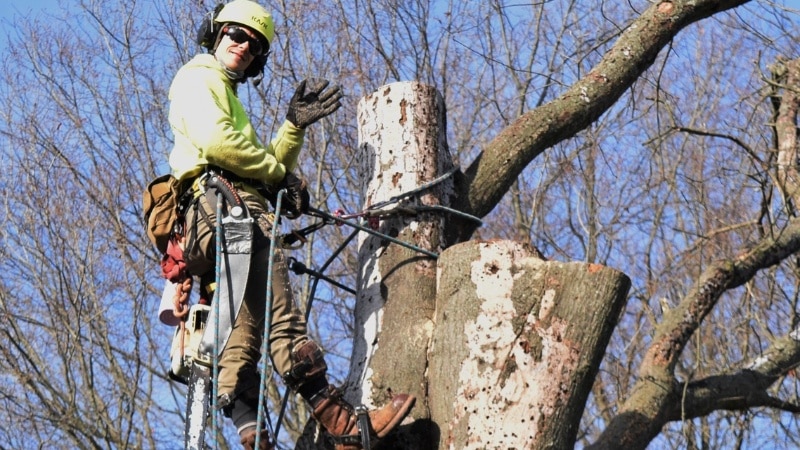
Clauser’s ISA Certified Arborists use advanced rigging techniques and safety equipment for precise tree removal in tight spaces.
Immediate Removal Situations
Dead or dying trees, especially emerald ash borer victims throughout Montgomery and Bucks Counties, require prompt removal before structural integrity degrades further. Dead wood becomes increasingly brittle, creating unpredictable branch drop and complete tree failure risks. Professional dead tree removal ensures safe elimination of these hazards before they cause property damage.
Trees with severe structural damage from storms, such as major trunk cracks, extensive root damage, or multiple large branch failures, rarely justify the cost and uncertainty of extensive treatment attempts. When structural integrity is fundamentally compromised, removal provides the only reliable safety solution.
Removal vs. Treatment Decision Factors
Professional assessment weighs multiple factors when evaluating removal versus treatment options. Tree age, species characteristics, extent of damage, proximity to targets, and cost-benefit ratios all influence recommendations.
For trees with localized problems, like isolated dead branches, minor cavity development, or early pest infestations, targeted treatments often provide cost-effective solutions. However, when treatment costs approach removal expenses and long-term prognosis remains poor, removal typically represents the more prudent investment.
Location-Specific Considerations
Trees growing too close to structures for safe treatment access may require removal regardless of their condition. This situation frequently occurs in established neighborhoods where trees planted decades ago now interfere with building additions, deck installations, or other property improvements.
When immediate safety concerns arise, professional emergency services provide rapid response to address dangerous tree situations before they cause injury or property damage.
Frequently Asked Questions About Hazardous Trees
How can I tell if a tree is dangerous after a storm?
Look for hanging branches, new trunk cracks, or sudden leaning that wasn’t present before the weather event. Don’t approach closely; call professionals for storm-damaged trees since instability may not be immediately apparent.
What does a professional tree hazard assessment include?
A Certified Arborist examines the tree from roots to crown, checking for structural defects, decay, pest damage, and environmental factors. They assess risk level and recommend specific actions, like pruning, removal, or monitoring, based on scientific evaluation methods.
Can healthy trees suddenly become dangerous?
Yes, severe weather can cause even healthy trees to fail, especially during Pennsylvania’s winter storms. Sudden environmental stresses can overwhelm trees that show no previous warning signs of structural weakness.
Are all leaning trees dangerous?
No, not all leaning trees are dangerous. Many trees develop natural leans over time and remain stable through compensating root development. Sudden leaning after storms concerns us, but a gradual lean may be harmless if the tree is otherwise healthy and properly established.
Keep Your Property Safe with Help from the Experts at Clauser Tree Care
Early identification of hazardous trees protects both your family’s safety and your property’s value. Professional assessment often reveals cost-effective treatment options that preserve valuable trees while addressing real safety concerns.
Clauser Tree Care’s three decades of experience throughout Montgomery and Bucks County means we understand the regional factors that affect tree stability in your area.
Ready to get started? Give us a call at 215-542-8291 or request a quote online for assessment of a hazardous tree or removal of one that threatens your property.
About Clauser Tree Care
From who you talk to on the phone in our office, to our courteous and experienced work crews who provide your service, all of the hard-working team members at Clauser Tree Care strive for complete client satisfaction. Our job is simply not done until you are pleased with the experience that you have had working with our company. Founded more than 25 years ago on the principles of honest work and arboricultural best practices, we strive for a higher standard of care for a greener future.