After the major winter storm at the end of January 2026, many Bucks and Montgomery County homeowners were relieved to see their trees still standing. But winter tree damage isn’t always immediate – or obvious. Snow and ice loads can crack limbs, weaken branch unions, and stress trees in ways that don’t fully reveal themselves until weeks or even months later.
Ignoring winter damage doesn’t make it go away – it increases the risk of delayed failure, higher repair costs, and preventable emergencies down the road.
Key Takeaways
- Winter damage creates hidden structural weaknesses that can cause catastrophic tree failure months later during spring storms, even when trees initially appear stable.
- Open wounds from winter damage allow decay fungi to penetrate and spread throughout the tree’s internal structure, compromising its stability over time.
- Storm-damaged trees become vulnerable to pest infestations and diseases that enter through wounds, leading to long-term decline even if the tree survives the initial damage.
- In Pennsylvania, known tree damage that’s left unaddressed can create liability if the tree later injures someone or damages nearby property.
- Addressing winter damage immediately with professional arborist care costs significantly less than waiting for emergency removal situations that develop when damage is ignored.
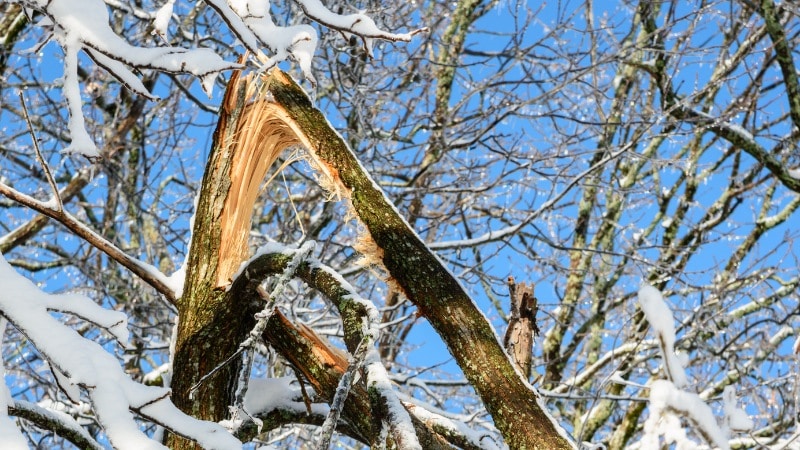
Winter storms create wounds and structural damage that provide entry points for decay fungi and compromise the tree’s natural defenses.
Why Winter Tree Damage Shouldn’t Be Ignored
Your trees survived the winter, but they may have problems lurking just under the surface that make them ticking time bombs. Ignoring these five key potential failure points can lead to catastrophic problems down the line.
1. Winter Damage Can Lead to Delayed Structural Failure
After the ice and snow melt from your tree, you may think your tree is out of the woods. That’s a popular misconception and couldn’t be further from the truth. Much of the damage from heavy ice and snow loading is nearly impossible for most people to inspect, as it is subtle. But once spring and summer storms hit, it can exploit the weakness and cause tree failure.
Ice loading and wind create micro-fractures in branch unions and split wood fibers in ways that aren’t immediately visible. These compromised connections hold together initially, but they’re fundamentally weakened. As trees begin their spring growth cycle, new foliage adds weight to already stressed branches. What started as a small crack becomes a major failure point.
With the unpredictable weather we experience in Southeastern Pennsylvania, a storm could strike at any moment and bring down half the tree. Have an arborist inspect your trees for any potential hazards and allow them to make recommendations on whether your tree can recover from winter damage.
2. Internal Decay Often Develops Long After the Storm
Open wounds in your tree caused by winter damage can create openings for internal decay to take hold and spread throughout the tree. Moisture penetrates the new wounds, creating ideal conditions for decay fungi.
The fungi break down the wood’s internal anatomy and make it much less structurally sound. The most troubling part of the decay process is how it remains invisible until substantial damage has occurred. While trees compartmentalize decay, there is only so much they can do once the internal structure becomes compromised.
Arborists can inspect your trees and use advanced testing equipment to understand the extent of the decay and whether it is possible to save your tree.
3. Stressed Trees Become More Vulnerable to Pests and Disease
Sometimes the main issue from winter damage isn’t major structural problems, but minor damage that worsens. Open wounds on a tree, especially those damaged by a late winter storm, can be an open invitation for tree pests and diseases to infect the tree.
Worse yet, the stress from the winter damage will leave your tree less able to fend off these threats. Your tree may survive the initial winter damage but will begin to decline over several seasons without intervention.
Most insect and disease problems are treatable with help from a Certified Arborist.
4. Known Tree Damage Can Increase Liability Risk
Some homeowners assume that if a tree is still standing after a storm, it’s no longer a concern. In reality, winter storms can leave behind damaged branches that are far more likely to fail during the next wind or rain event. If that risk is known and left unaddressed, liability may arise if a falling branch damages a neighboring property.
Pennsylvania property law places responsibility on landowners to maintain their trees in a condition that doesn’t threaten neighboring properties. When a tree with known damage fails and damages a neighbor’s vehicle, structure, or injures someone, the liability questions become much more complex than they would be with an unexpected failure of an apparently healthy tree.
Insurance claims also become more complicated when damage was known but left unaddressed. While coverage varies by policy, many insurance companies investigate whether property owners took reasonable steps to address known risks. Professional documentation of tree condition and any recommended treatments become crucial evidence in these situations.
The liability extends beyond just property damage to neighbors. Trees that fail due to unaddressed winter damage can:
- Cause injuries to people using sidewalks
- Damage municipal property, like streetlights or signs
- Create hazards for utility workers
5. Ignoring Damage Leads to Higher Long-Term Costs
Winter damage that seems minor is often the most expensive to ignore. Issues that could be corrected with light pruning or targeted treatment early on can escalate into emergency situations that require full tree removal later.
When damaged branches are left in place, subsequent storms place additional stress on already weakened wood. Breaks worsen, bark tears spread, and exposed tissue allows decay to move deeper into the tree. Over time, that decay compromises structural integrity, turning a manageable repair into a safety concern.
What begins as a simple pruning job can quickly become a complex and costly removal once a tree becomes unstable. Addressing winter damage early gives arborists the opportunity to preserve the tree, reduce risk, and avoid emergency work—which is almost always more expensive.
Saving a tree is always better than removing it, and it can save you money as well by being proactive.
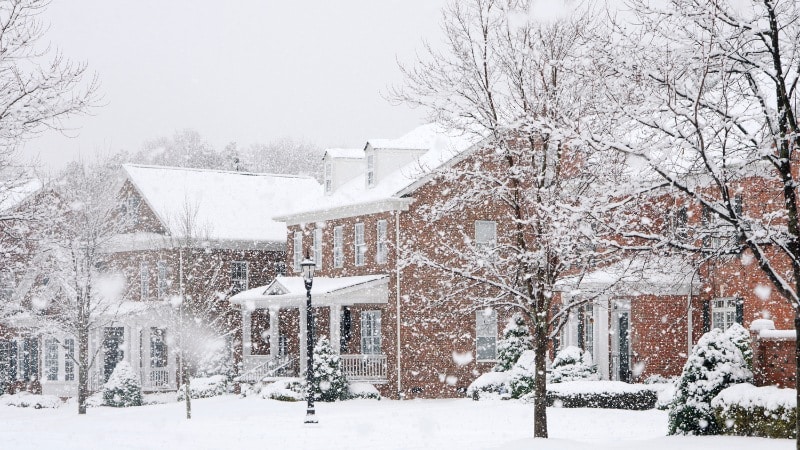
Even when trees appear to weather winter storms successfully, hidden damage may be developing that could lead to failure during future storms.
Frequently Asked Questions About Winter Storm Damage
How long after winter storms do trees typically fail?
Delayed failure can occur months or even years after the initial storm. The timing depends on factors like the severity of damage, tree species, and subsequent weather conditions, but spring’s combination of new foliage weight and active growth frequently triggers failures that began with winter damage.
Can I tell if my tree has internal decay from winter damage?
Internal decay is usually invisible from the ground and requires professional assessment with specialized tools. External symptoms, like mushroom growth or obvious cavities, only appear after substantial internal damage has already occurred. Learning to identify dangerous trees can help you recognize when professional assessment is needed.
Does minor winter damage always lead to serious problems?
No, minor winter damage doesn’t always lead to serious problems. But the risk increases significantly without professional evaluation and appropriate treatment. Minor damage can be managed successfully when addressed early, but the same damage left untreated often becomes a major problem as decay establishes and tree defenses are compromised.
What’s the difference between winter damage and normal aging?
Winter damage creates sudden structural weakness and entry points for decay, while normal aging is a gradual process trees can adapt to over time. Winter damage compromises the tree’s natural defenses and creates conditions that accelerate problems rather than allowing the slow adaptation that occurs with natural aging.
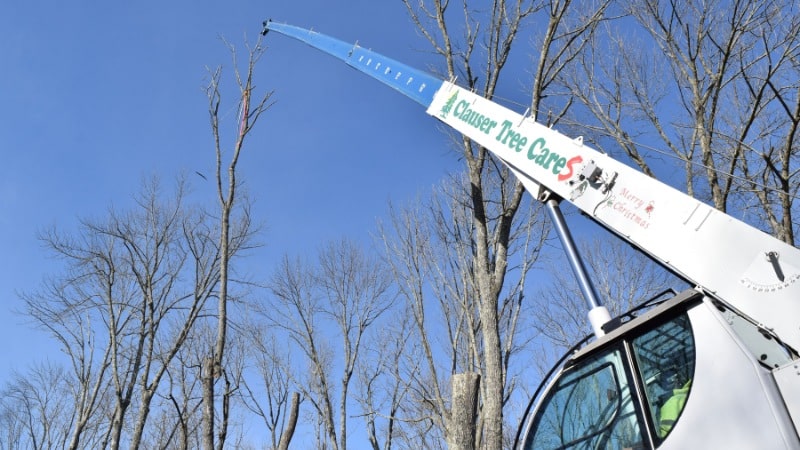
Professional arborists use specialized equipment like cranes to safely remove trees that have suffered too much winter damage.
Don’t Wait Until Spring Storm Season – Get Professional Help with Your Trees Today
Winter tree damage operates on its own timeline, creating a domino effect of consequences that unfold over months rather than days. The structural weakness that seems stable today becomes tomorrow’s emergency, and the small crack that looks manageable now becomes next year’s expensive removal project.
If you’re worried about your tree after a winter storm, the team at Clauser Tree Care is ready to help. We’ll examine the damage to your tree and create a treatment plan to get it on the road to recovery. Call us today at 215-337-4022 or request a quote online.

About Clauser Tree Care
From who you talk to on the phone in our office, to our courteous and experienced work crews who provide your service, all of the hard-working team members at Clauser Tree Care strive for complete client satisfaction. Our job is simply not done until you are pleased with the experience that you have had working with our company. Founded more than 25 years ago on the principles of honest work and arboricultural best practices, we strive for a higher standard of care for a greener future.