If you’ve got a mature tree that’s looking a little off this spring — thinner canopy, smaller leaves, slower to fill in than the others on your block — your lawn fertilizer probably isn’t going to fix it. Trees and turfgrass need different things, and deep root fertilization is the targeted alternative for homeowners in Bucks and Montgomery Counties whose mature trees aren’t getting what they need from a standard lawn-care routine.
That said, deep root fertilization is often misunderstood by homeowners and oversold by some companies. Knowing why arborists use it, how the process works, what results to expect, and when it’s actually the right call for your trees helps you set realistic expectations and recognize a legitimate recommendation when you hear one.
Key Takeaways
- Deep root fertilization uses hydraulic injection to deliver a tree-specific nutrient blend directly into the root zone, where it’s targeted at trees rather than competing with denser turfgrass roots above.
- Lawn fertilizer is calibrated for grass health, not tree health; trees in maintained lawns get some of those nutrients, but often not in the right amounts or balance.
- Not every tree needs fertilization, and a soil test determines whether it’s the right treatment and what specific nutrients are lacking.
- Soils across Bucks and Montgomery Counties, compacted suburban clay, silty poorly-draining ground, nutrient-depleted soil under mature canopy, often need more than passive lawn feeding can deliver.
- The process is quick, minimally disruptive, and results become visible over one growing season.
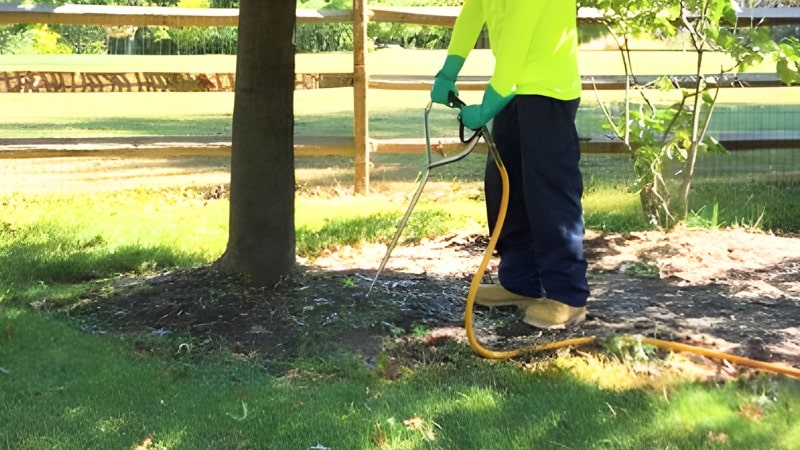
A hydraulic injection probe delivers liquid fertilizer directly into the root zone, bypassing the surface entirely.
What Is Deep Root Fertilization?
Deep root fertilization is a professional service that uses a hydraulic injection probe to deliver custom-blended liquid fertilizer directly into a tree’s root zone. It replaces guesswork with a soil-tested prescription and puts nutrients exactly where the tree can absorb them.
How the Process Works
A technician inserts the injection probe 8 to 12 inches into the soil and delivers liquid fertilizer in a grid pattern within the tree’s drip line. Each probe hole does double duty: alongside the nutrient delivery, it creates a small channel that helps relieve compaction and improves the movement of air and water below ground. That dual benefit is part of what makes professional tree fertilization more than just feeding the tree.
Why Lawn Fertilization Isn’t Enough for Trees
Feeding the lawn isn’t a substitute for feeding the tree, even when both share the same patch of ground. Lawn-grade products are built around what grass needs to grow healthy blades. They are heavy on nitrogen, calibrated for turf, and not balanced for the broader nutrient mix a mature tree requires.
There’s also a competition issue happening below the surface, where tree feeder roots and grass roots share the upper 6 to 8 inches of soil, and turfgrass tends to be denser in that zone. When fertilizer hits the lawn, the grass absorbs a disproportionate share before the tree gets its chance, so your trees are picking up some of those nutrients but rarely enough of the right ones to thrive in compacted or depleted ground.
GOOD TO KNOW: All of Clauser’s Tree & Shrub Care Programs include spring and fall nutrient applications because trees respond best to consistent, seasonally timed care rather than reactive treatments after visible decline begins.
How Do You Know If Your Trees Need Professional Fertilization?
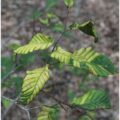
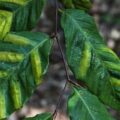
You can usually tell a tree needs professional fertilization by examining the tree itself, as nutrient-deficient trees show stress visually, and once you know what to look for, the warning signs are hard to miss. A few visual signs to watch for include:
- Undersized leaves compared to previous years
- Pale or yellow-green foliage, especially in species that should be a deep, dark green
- A thin or sparse canopy — more sky visible through the branches than there used to be
- Slow growth or general decline despite consistent watering
- Early leaf drop in fall, before neighboring trees of the same species
WARNING: Not every struggling tree needs fertilizer, and many signs of tree stress come from problems a nutrient blend can’t solve. A soil test is what tells an arborist whether fertilization is actually the right treatment to begin with.
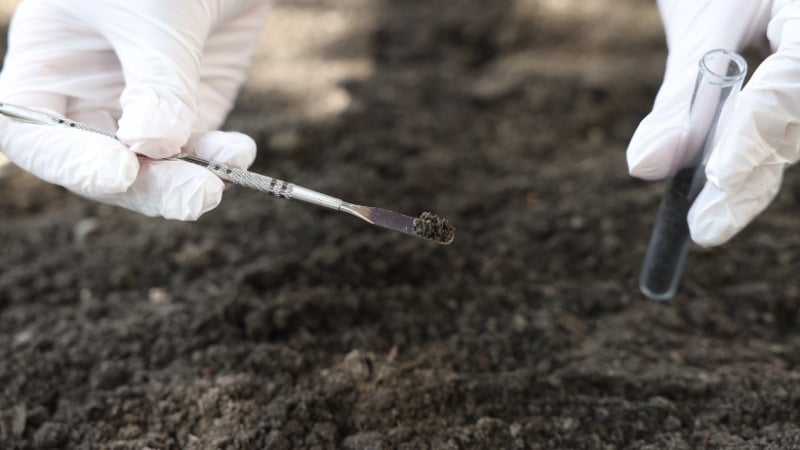
A professional soil test reveals what nutrients the ground is actually missing, along with the pH and organic matter levels an arborist needs to build a treatment plan.
Why Do Trees in Bucks and Montgomery Counties Need Fertilization?
Trees in Bucks and Montgomery Counties often need fertilization because the local ground is working against them. Conditions across Southeastern Pennsylvania make it harder for mature trees to access the nutrients, oxygen, and moisture they need to stay healthy. Common issues include:
- Heavy clay soils in parts of Bucks County that drain poorly and prevent nutrients from reaching the root zone efficiently
- Silty soils around Doylestown where water tends to pool at the surface instead of moving nutrients deeper into the soil profile
- Nutrient depletion in older neighborhoods, like Chalfont and Hatfield, where mature trees have spent decades pulling from the same soil without natural leaf litter replenishing it
- Compaction in newer developments around Warrington and Horsham caused by mowing equipment, foot traffic, construction, and root competition compressing the soil and limiting root function
As Montgomery County continues to grow, ongoing construction activity continues disturbing soils on properties where mature trees are already under stress.
Why a Soil Test Determines the Right Treatment
A soil test is the difference between a generic application and a treatment that fits your trees. It measures what nutrients are present in the soil, how acidic or alkaline the ground is, and how much organic matter is in the mix: the information an arborist needs to figure out both what’s missing and what the tree can actually take up. That precision matters here because soil conditions can vary significantly even within the same property.
The Penn State Extension service offers soil testing to help give you an idea of your soil’s condition. These tests are much more comprehensive than at-home kits and allow you to begin working with an arborist to develop a fertilization plan.
What Should You Expect from a Deep Root Fertilization Treatment?
Expect a short, low-disruption visit: an arborist assessment, a soil test, and a single round of injections that wraps up in an hour or two for most residential properties, followed by visible improvement over the next growing season.
The Process from Start to Finish
The initial visit begins with an arborist evaluating your trees and conducting a soil test to confirm fertilization is the right call, determine the specific blend, and identify the best time of year to apply it.
On treatment day, a technician arrives with a hydraulic injection probe connected to a fertilizer tank and works through a grid pattern within the drip line of each tree, wrapping up most residential properties in an hour or two.
There’s no prep work for the homeowner, with no need to water beforehand, and no waiting period before you can mow, water, or use the yard normally afterward.
What Should Be in the Blend
The right blend is whatever the soil test calls for, applied at moderate rates that support steady, healthy development rather than a quick green-up. A reputable arborist won’t reach for high-nitrogen chemical fertilizers as a default, because pushing rapid growth with excess nitrogen makes trees more attractive to insects and more vulnerable to disease.
What Results to Expect
Results don’t happen overnight. Visible improvement unfolds across one full growing season as the tree responds to restored nutrient availability. The improvements include healthier foliage, fuller canopy, and more vigorous growth by the following spring.
For trees dealing with ongoing stress, a single treatment helps, but an annual or biennial program delivers better long-term results.
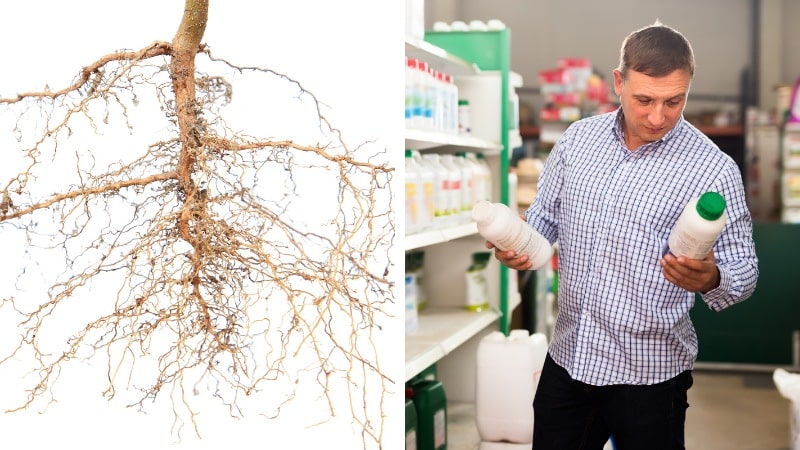
Off-the-shelf fertilizers are formulated for general lawn and garden use, not for the specific nutrient demands of a mature tree’s root system.
Frequently Asked Questions About Deep Root Fertilization
How much does deep root fertilization cost?
Cost varies based on tree size, the number of trees being treated, and what the soil test reveals about the right blend. Most residential treatments fall in a per-tree range, with discounts when multiple trees are treated in a single visit. The easiest way to determine the price is to speak with an arborist and get a quote from them.
How often should trees be professionally fertilized?
It depends on the tree’s condition, the soil test results, and whether it’s recovering from stress or being maintained proactively. Some trees benefit from annual treatment, while others only need attention every two to three years. An arborist can recommend a schedule based on what your specific trees actually require.
Will deep root fertilization damage my lawn?
No. The injection probe creates small holes that close back up quickly, and the liquid fertilizer is applied below the surface rather than spread across the lawn. There’s no impact on your grass and no waiting period before you can mow, water, or use the yard normally.
When should I call an arborist about fertilization?
The best time is before you see obvious problems. Reactive fertilization can help a tree that’s already showing nutrient stress, but proactive treatment on a regular schedule keeps mature trees healthier and more resilient and gives an arborist a chance to catch issues a homeowner would miss. If you’ve invested years in trees that anchor your property, periodic professional attention is one of the simplest ways to protect that investment.
Should I fertilize a tree that’s already stressed or sick?
You should not fertilize a tree that is already stressed or sick until an arborist has diagnosed what’s actually causing the stress. Fertilizer won’t fix a disease, pest infestation, drainage problem, or root damage, and applying nitrogen to a struggling tree can sometimes make things worse by encouraging weak new growth that’s more attractive to insects. Get a diagnosis first — and then let the treatment plan follow from there.
Give Your Trees What They Actually Need with Professional Fertilization
Healthy mature trees are one of the highest-value features on a residential property, and the difference between a thriving tree and a declining one can come down to proper fertilization. Deep root fertilization allows arborists to get a specific blend of nutrients directly to the tree’s roots where they need them the most.
If you’ve noticed something looks off with your trees, the experts at Clauser Tree Care are ready to help. Our team will determine if fertilization benefits your trees and gives them the nutrients they need directly with deep root fertilization. Call us today at 215-337-4022 or request a quote online for professional fertilization today.
About Clauser Tree Care
From who you talk to on the phone in our office, to our courteous and experienced work crews who provide your service, all of the hard-working team members at Clauser Tree Care strive for complete client satisfaction. Our job is simply not done until you are pleased with the experience that you have had working with our company. Founded more than 25 years ago on the principles of honest work and arboricultural best practices, we strive for a higher standard of care for a greener future.