The longer a tree stands, the harder dead tree removal gets because dead wood continually breaks down, and the tree becomes less predictable to take down safely. For homeowners in Horsham, Willow Grove, Maple Glen, and across Eastern Montco, this winter is another reason not to wait.
According to NOAA’s Climate Prediction Center, a strong-to-very-strong El Niño is likely this winter. While it’s hard to predict what that means for the snow and ice in eastern Pennsylvania, it’s true that snow, ice, and high winds can add more stress to a dead tree that’s already compromised.
Key Takeaways
- Dead trees near people, homes, vehicles, utilities, or frequently used areas generally require more immediate attention than those in isolated locations.
- Dead trees continue to deteriorate over time, and weakened branches, unions, and trunk sections can make removal more difficult.
- Waiting too long can limit removal options if the tree becomes unsafe to climb or rig and requires an aerial lift, crane, or more complex setup.
- There is no reliable timeline for how long a dead tree will remain standing because deterioration varies by species, condition, previous damage, and site conditions.
- If you think a tree is dead, have a professional inspect it before scheduling removal to confirm its condition and determine whether it can be preserved.
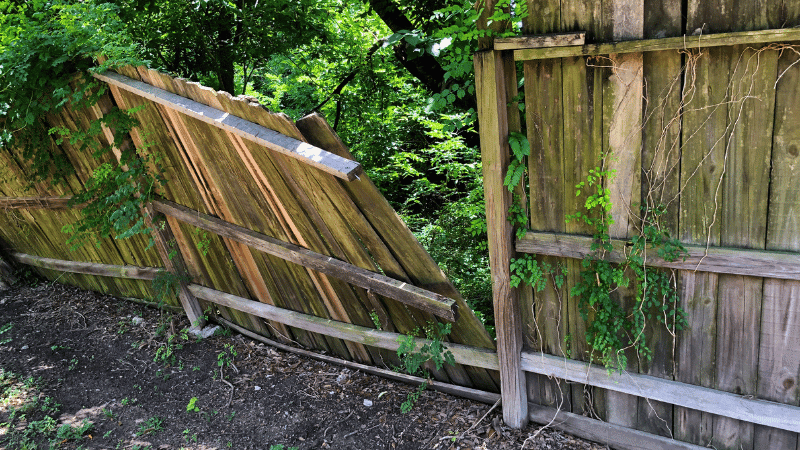
Once you know a tree is dead, responsibility for what it damages can land squarely on you.
When Should a Dead Tree Be Removed?
Once a tree is confirmed dead, removal is generally recommended, but not every dead tree carries the same urgency. How soon it should come down depends on its condition, location, and the potential consequences if part or all of the tree fails.
Dead tree removal becomes more urgent when:
- The tree could fall on a home, garage, vehicle, or neighboring property
- Branches extend over a driveway, sidewalk, play area, or other frequently used space
- The tree is close to utility or service lines
- Large branches have started falling
- The tree has developed noticeable structural changes
A dead tree in an isolated area, away from people and property, may not need the same immediate attention. But even without obvious changes from the ground, deterioration can continue after the tree dies.
If you’re unsure whether a tree is dead or structurally hazardous, our guide to identifying hazardous trees can help you understand what to look for.
What Should You Do If You Think a Tree Is Dead?
Start with a few checks that are possible from the ground, then have your findings confirmed by a professional. Stay out from under the tree while you look, and don’t climb it or cut into large dead limbs. Focus on:
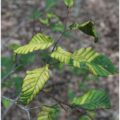
- Twigs that snap instead of bending, with no moist green tissue under the bark when you scratch a small twig with a fingernail
- Bark that’s loose, peeling, or falling away from the trunk
- No new leaves or buds in spring and summer, when a healthy tree of the same type would be leafed out
Check a few twigs you can reach from the ground or that have already fallen, since a single dead branch doesn’t mean the whole tree’s gone. Timing matters, too, since deciduous trees drop their leaves in fall and stay bare all winter, so a leafless tree in late fall or winter isn’t a sign of death. Some species shed bark naturally, too.
These checks can raise red flags, but can’t confirm a tree’s dead. A dormant tree can look lifeless, and a living tree can carry dead limbs. Have a qualified arborist confirm the tree’s condition before anything’s cut. If your tree needs to be removed, Clauser’s tree removal crews can walk you through the options.
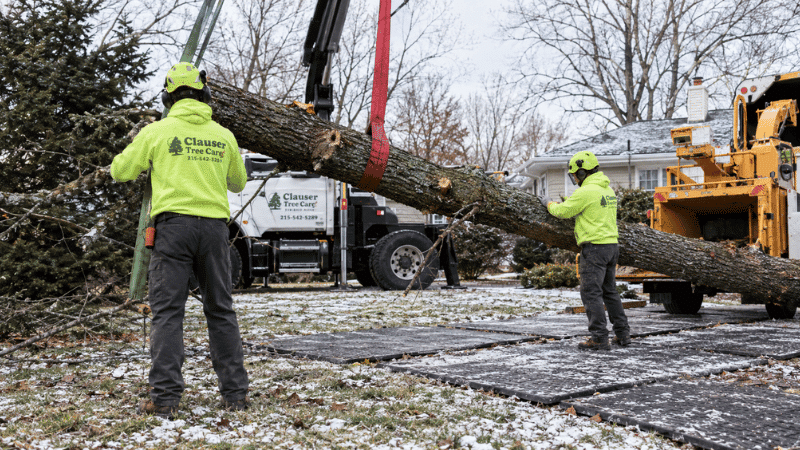
Frozen ground supports heavy equipment with far less damage to your lawn.
What Happens If You Wait to Remove a Dead Tree?
Waiting to remove a dead tree can make an already necessary removal more complicated. As the tree deteriorates, its structure becomes less reliable, which can affect how safely and efficiently a crew can take it down. The longer it stands, the more important its condition becomes when planning the removal.
Dead Wood Can Become More Brittle and Unpredictable
A dead tree can lose structural strength as it deteriorates. Smaller branches may begin to break first, followed by larger limbs and, eventually, sections of the trunk. How quickly this happens varies by species and the tree’s condition.
Penn State notes that most dead trees gradually break down over several years, although some species can deteriorate differently. Ash trees, for example, can become particularly unpredictable after death and have been known to break along the trunk.
That is why a dead tree that has remained standing for months or years shouldn’t be assumed to be structurally sound. The longer it stands, the more its condition may change, even when those changes are not obvious from the ground.
Dead Trees Can Be More Difficult to Remove Safely
A deteriorating dead tree is harder to remove safely because crews usually rely on the tree itself for climbing, rigging, and controlling sections as they are lowered. As a dead tree deteriorates, branches, unions, and sections of the trunk may no longer have the strength needed to safely support that work.
Instead of moving through the canopy and dismantling the tree using predictable anchor points, the crew may have to work around weakened sections or avoid placing weight on them altogether. This can make each step of the removal more deliberate and complex.
Waiting Can Limit Removal Options
If a dead tree becomes too structurally compromised to climb or rig safely, removing it may require an aerial lift, crane, or other equipment. That can create another challenge when the tree is in a tight backyard, behind a home, or somewhere with limited access for equipment.
Without enough room to position and operate that equipment safely, the crew may need a more complex removal plan. Nearby homes, utilities, fences, and other obstacles can further limit what is possible.
As a result, waiting can leave the crew with fewer options for safely removing the tree. A more complicated setup, additional equipment, or more time on the job can also increase the cost of removal.
How Long Can a Dead Tree Stay Standing?
There is no reliable timeframe for how long a dead tree will remain standing. Some may stand for years, while others begin losing branches or fail much sooner. Species, decay, previous damage, exposure, and site conditions can all influence how quickly the tree deteriorates.
That deterioration also doesn’t happen evenly throughout the tree. Branches or sections of the canopy may fail while the trunk remains standing, which means a dead tree doesn’t have to fall completely to create a hazard.
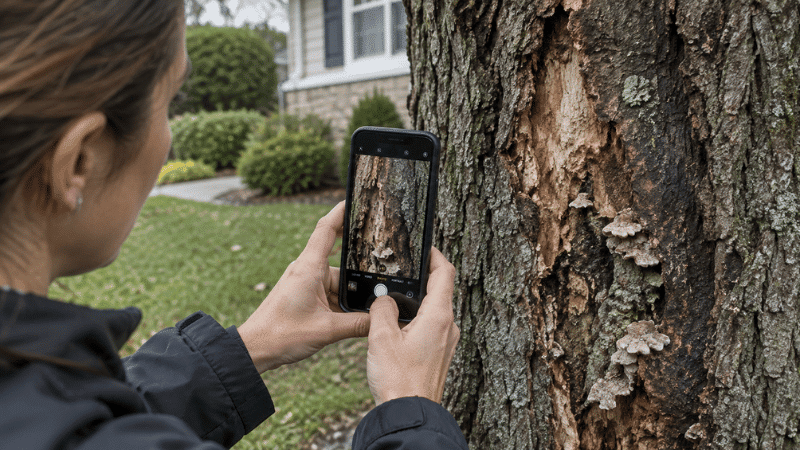
Documenting a tree’s condition early can make a big difference if you ever need to file a claim.
Should I Remove a Dead Tree Myself?
Large dead trees, especially those near homes, utilities, vehicles, roads, or frequently used areas, should generally be handled by qualified tree care professionals.
One challenge with DIY dead tree removal is that you may not know how much structural strength the tree has lost before you start cutting. A branch, top, or trunk section that appears intact from the ground may not respond as expected once a cut is made, and its weight begins to shift.
Felling the entire tree isn’t necessarily safer. Lean, compromised wood, limited clearance, utility lines, buildings, and other obstacles can make it difficult to control where and how the tree falls.
Clauser’s tree removal crews regularly work with dead and deteriorating trees and can choose a removal method based on the tree’s condition and the surrounding site.
Frequently Asked Questions About Dead Tree Removal
Does homeowners insurance cover dead tree removal?
Generally, homeowners insurance does not cover removing a dead tree before it falls because preventive removal is typically considered property maintenance. If the tree falls and causes covered damage, your policy may cover some of the resulting damage and removal costs depending on its terms and the circumstances. Confirm your specific coverage with your insurer.
Do I need a permit to remove a dead tree?
You may need a permit to remove a dead tree, depending on where you live and where the tree is located on your property. Requirements vary across Bucks and Montgomery counties, and trees in public rights-of-way, protected areas, or certain municipalities may be subject to additional rules.
For example, Doylestown Borough requires a permit for most dead or damaged tree removals, while other municipalities have different requirements for trees on private residential property. Before removal begins, check your specific township or borough requirements to determine whether you need a permit or municipal approval.
What should I do if a dead tree starts dropping branches?
A dead tree that has begun dropping significant limbs deserves prompt professional attention, especially when people, structures, vehicles, or other property are within reach. If the tree has partially failed or presents an immediate threat, contact Clauser Tree Care for emergency tree service.
What if my neighbor has a dead tree that could fall on my property?
If a neighbor’s dead tree could fall onto your property, notify the property owner about your concern and document the tree’s condition with photos and written communication. This creates a record that you brought the potential hazard to their attention.
You generally cannot remove a tree located on someone else’s property without permission. If the owner does not address the tree, your next steps may depend on local ordinances, property boundaries, and the specific circumstances. Clauser’s neighboring tree damage FAQs explain these situations in more detail.
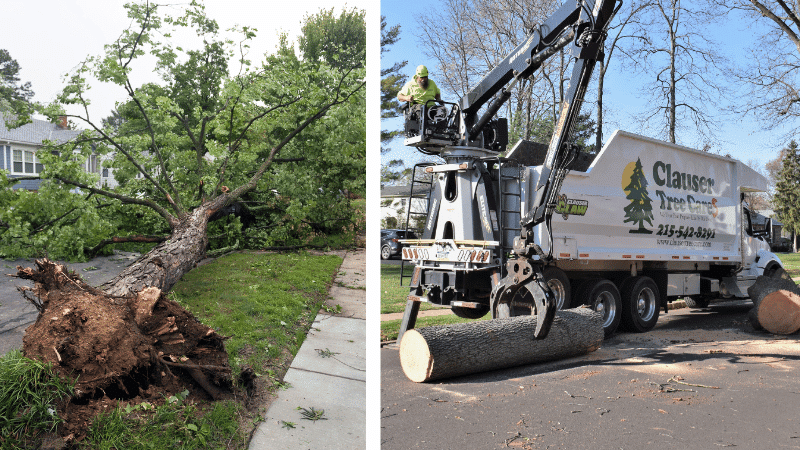
Dead wood is brittle and unpredictable, which is why crane-assisted removal is often the safest approach.
Make the Call Before Winter Does
No seasonal outlook can tell you whether a particular dead tree will make it through the winter. You can control the situation by addressing a known dead tree before further deterioration or winter weather complicates it.
If you have a dead tree in Horsham, Willow Grove, Maple Glen, or the surrounding area, Clauser Tree Care can determine the appropriate approach for your property. Request an estimate or learn more about our tree removal services.
About Clauser Tree Care
From who you talk to on the phone in our office, to our courteous and experienced work crews who provide your service, all of the hard-working team members at Clauser Tree Care strive for complete client satisfaction. Our job is simply not done until you are pleased with the experience that you have had working with our company. Founded more than 25 years ago on the principles of honest work and arboricultural best practices, we strive for a higher standard of care for a greener future.