The devastating June 2025 storm that left over 300,000 PECO customers without power across Montgomery and Bucks Counties serves as a stark reminder of how quickly severe weather can turn mature, beautiful trees into dangerous hazards.
That reality is especially true in our region, where historic neighborhoods, like Doylestown, are lined with century-old oaks and estate properties in Blue Bell boast expansive tree canopies. These mature landscapes bring beauty and character but also demand proactive planning to prevent storm damage and protect both property and family safety.
Key Takeaways
- Conduct pre-storm risk assessments focusing on Pennsylvania’s vulnerable tree species, like red maple and sugar maple, that are susceptible to ice and wind damage.
- Establish emergency contact protocols, including PECO (800-841-4141), local emergency management through ReadyMontco and Ready Bucks alert systems, and Certified Arborists.
- Document tree conditions and locations for insurance purposes with photos and professional assessments, as Pennsylvania homeowners’ insurance typically covers storm damage but requires proper documentation.
- Never attempt to remove trees touching power lines or structural debris and always call certified professionals for emergency situations.
- Leverage local expertise from companies like Clauser Tree Care that has more than 30 years of experience in Montgomery and Bucks County, specialized equipment, and established relationships with utility companies and municipal authorities.
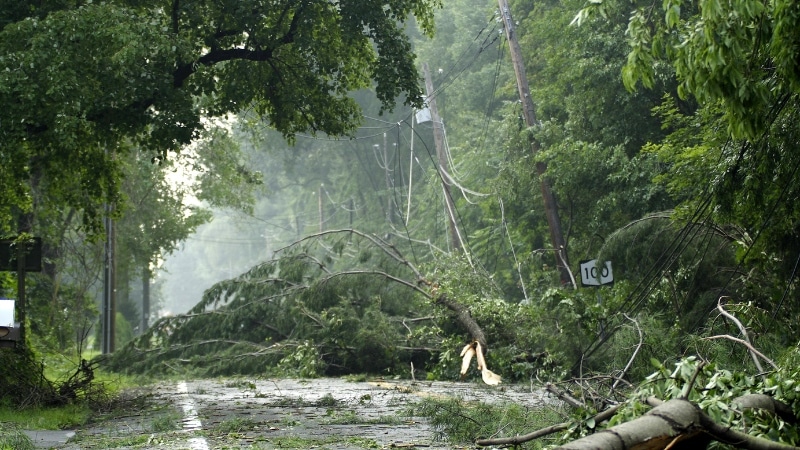
Major storms can create widespread tree failures that require immediate professional response to restore emergency access routes.
What Winter Weather Risks Affect Trees in Montgomery and Bucks Counties?
Trees in Montgomery and Bucks Counties are most at risk from freeze-thaw cycles, heavy wet snow, and ice storms. Even healthy trees can fail under these conditions, turning into hazards that threaten homes, power lines, and roadways. According to the National Weather Service, ice storms are particularly dangerous for our area. Just 1/4 inch of ice is enough to snap large branches or bring down entire trees, creating widespread property damage and outages.
Which Tree Species Are Most Vulnerable to Winter Damage?
The most vulnerable tree species common throughout our neighborhoods include:
- Red and Sugar Maples: Extensive in neighborhoods like Chalfont and Warrington, these trees have brittle wood that breaks under ice loads.
- Eastern Hemlock: Popular evergreen screening trees that accumulate heavy snow and ice on their dense foliage.
- Bradford Pears: Common ornamental trees with weak branch structure, especially vulnerable in developments around Lansdale and Telford.
- Pin Oaks: Mature specimens in established areas, like Ambler, often have dead lower branches that become projectiles during storms.
Neighborhoods at Higher Risk from Mature Canopies
Established communities across Montgomery and Bucks Counties face added challenges due to dense, mature tree cover, including:
- Doylestown’s Historic District: Century-old trees create beautiful streetscapes but pose significant emergency access challenges when they fail.
- Blue Bell’s Estate Properties: Extensive woodland areas can experience multiple simultaneous tree failures, requiring coordinated response efforts.
- Dresher’s Custom Homes: Trees growing close to structures on wooded lots mean even small branch failures can cause significant property damage.
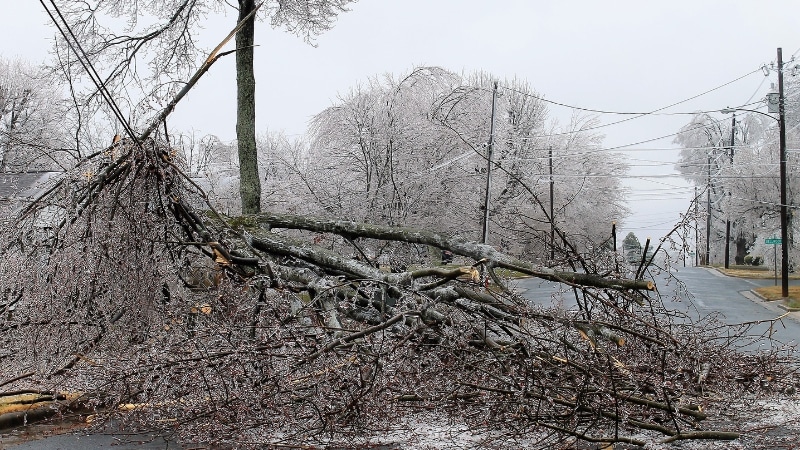
Ice storms create complex emergency situations requiring coordination between tree services, utility companies, and emergency management agencies.
How to Prepare for Storm Season in Montgomery and Bucks Counties
Effective emergency tree care begins with proactive preparation during calm weather. Montgomery County Emergency Management recommends conducting thorough property assessments before storm season arrives.
Why Schedule a Professional Tree Risk Assessment?
Scheduling a professional tree risk assessment gives an ISA Certified Arborist a chance to identify hidden risks such as internal decay, weak branch unions, and root problems that homeowners often miss. A professional inspection also provides crucial documentation for insurance claims if storm damage occurs.
What Emergency Numbers Should Homeowners Keep on Hand?
Every homeowner should maintain a quick-access contact list, including:
- PECO Emergency Line: 800-841-4141 (for downed power lines or electrical emergencies)
- Clauser Tree Care Emergency: 215-542-8291 (24/7 emergency tree services)
- ReadyMontco Alerts: Sign up at montgomerycountypa.gov
- Ready Bucks Notifications: Register at buckscounty.gov
- Local Emergency Services: 911 for immediate life-threatening situations
How Should Homeowners Document Trees for Insurance?
To document trees for insurance, homeowners should create a comprehensive photo inventory of all trees on your property, focusing on those near structures, power lines, or valuable landscape features. Document tree species, approximate age, and condition. This documentation proves invaluable when filing insurance claims after storm damage.
“In our three decades serving Montgomery and Bucks County homeowners, we’ve seen how proper preparation makes all the difference during urgent situations. The families who have emergency plans in place and professional relationships established before storms hit always fare better than those scrambling to find help after disaster strikes.” – Steve Clauser
How to Reduce the Risk of Storm Damage
To help reduce the risk of storm damage, homeowners should address potential problems before they become emergencies. Remove dead wood through professional pruning, brace weak forks in valuable trees, and consider removing trees that pose unacceptable risks to structures or power lines. Proper winter tree care significantly reduces urgent situations.
What to Do During and After a Storm
Knowing what to do during and after a storm knocks down branches or an entire tree will allow you to have a plan in place.
Stay Safe Indoors During the Storm
Never venture outside during active severe weather, even if you hear trees falling. Stay away from windows and rooms where large trees could penetrate the structure. Monitor local weather alerts through ReadyMontco or Ready Bucks notification systems.
Safely Assess Your Property After a Storm
To safely assess your property after a storm, wait for wind speeds to drop below 25 mph to conduct a careful visual assessment from inside your home. Look for:
- Trees or large branches touching power lines
- Trees leaning against structures
- Hanging or partially broken branches
- Blocked driveways or emergency access routes
- Damage to neighboring properties from your trees
Understanding how to identify dangerous trees is crucial during post-storm assessments, as storm damage can create new hazards even in previously healthy trees.
Who Should You Call First in a Tree Emergency?
| Emergency Situation | Who to Call | Phone Number |
|---|---|---|
| Life-threatening emergencies: Anyone trapped/injured by fallen trees, trees on occupied structures, emergency vehicle access blocked | Emergency Services | 911 |
| Electrical hazards: Trees touching power lines, power outages from tree damage, suspected electrical dangers | PECO Energy | 800-841-4141 |
| Tree removal needs: Large trees on structures/vehicles, hanging branches, access restoration, complex removals | Professional Tree Service | 215-337-4022 |
Priority order: Life safety (911) comes first, electrical safety (PECO) second, then property restoration (tree service).
What Homeowners Should Never Attempt After a Storm
Never attempt to:
- Remove trees or branches touching power lines (even if power appears off)
- Use ladders around damaged trees with hanging branches
- Operate chainsaws without proper training and safety equipment
- Remove large branches or trees from structures without a professional assessment
The Penn State Extension Service emphasizes that storm-damaged trees are unpredictable and can shift unexpectedly, even after appearing stable. This is why emergency tree work requires specialized equipment and experienced crews who understand how to safely navigate the unique challenges of established neighborhoods.

Professional emergency tree cleanup requires proper safety equipment and training to handle storm-damaged trees safely.
Frequently Asked Questions About Emergency Tree Care Plans
How quickly can emergency tree services respond during major storms?
Response times depend on storm severity and public safety priorities. Life-threatening situations receive immediate attention, typically within 2-4 hours during active emergencies. Non-critical situations may require 24-48 hours during major storm events when multiple emergencies occur simultaneously. Having pre-established service relationships significantly improves response priority.
What should I do if a tree falls on power lines in Montgomery County?
If a tree falls on power lines, call PECO immediately at 800-841-4141 and assume all downed lines are energized and dangerous. Stay at least 35 feet away from downed lines and anything they’re touching. Never attempt tree removal near electrical wires – PECO coordinates with certified tree services that have specialized electrical safety training and equipment.
Does homeowners’ insurance cover emergency tree removal in Pennsylvania?
Coverage varies by policy, but most Pennsylvania homeowners’ insurance covers tree removal when trees damage covered structures like homes, garages, or fences. Tree removal from yards without structural damage typically isn’t covered. Understanding tree removal costs helps homeowners budget appropriately for emergency situations and understand what expenses may not be covered by insurance. Document all damage thoroughly and contact your insurance company promptly after storms to understand your specific coverage.
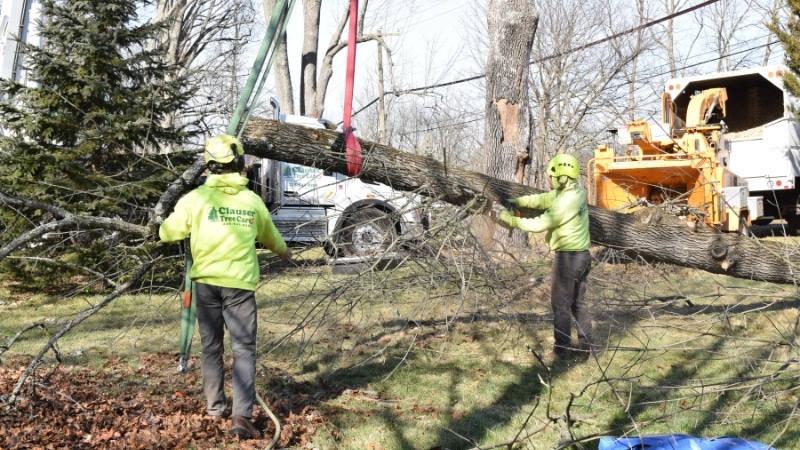
Complex emergency tree removals require specialized equipment and coordinated crew efforts to ensure a safe and efficient resolution.
Protect Your Property with Professional Emergency Tree Care from Clauser
Emergency tree situations require immediate, professional response to protect your family and property. Don’t wait until disaster strikes to establish relationships with qualified tree care professionals. Clauser Tree Care provides 24/7 emergency tree services throughout Montgomery and Bucks Counties with the local expertise, specialized equipment, and municipal coordination capabilities that emergency situations demand.
For emergency tree service, call 215-542-8291 any time, day or night. For non-emergency planning and risk assessments, request your free consultation to develop a comprehensive emergency preparedness plan for your property. Remember: we treat your property like it’s our own, especially when emergency situations put your family’s safety at risk.

About Clauser Tree Care
From who you talk to on the phone in our office, to our courteous and experienced work crews who provide your service, all of the hard-working team members at Clauser Tree Care strive for complete client satisfaction. Our job is simply not done until you are pleased with the experience that you have had working with our company. Founded more than 25 years ago on the principles of honest work and arboricultural best practices, we strive for a higher standard of care for a greener future.