
As autumn arrives in Montgomery and Bucks Counties, Pennsylvania’s mature trees face unique challenges from our region’s variable fall weather patterns. From early September’s lingering heat to November’s potential ice storms, homeowners in Doylestown, Chalfont, Ambler, and surrounding communities need a comprehensive approach to fall tree care. This season presents the perfect opportunity to assess tree health, address safety concerns, and prepare your valuable trees for Pennsylvania’s unpredictable winters.
Key Takeaways
- Early fall is ideal for identifying summer stress damage and storm vulnerabilities before harsh weather arrives in Montgomery and Bucks Counties.
- Focus fall pruning on dead, diseased, and damaged branches that pose risks during Pennsylvania’s ice storms and high winds.
- Proactive cabling, bracing, and hazard removal prevent costly property damage during fall weather events common in our region.
- Fall provides the best opportunity to spot emerald ash borer damage and schedule spring treatment consultations with Certified Arborists.
- Proper mulching and young tree protection in the fall significantly improve survival rates through Pennsylvania’s freeze-thaw cycles.
- Well-maintained trees increase home values by 10-15% in established neighborhoods like Lansdale, North Wales, and Warrington.
Inspect Trees for Summer Stress and Storm Damage
The transition from summer to fall in Pennsylvania creates ideal conditions for a comprehensive tree assessment. Homeowners throughout Montgomery and Bucks Counties should conduct thorough inspections while the weather remains mild and before leaf drop obscures potential problems.
What Homeowners Can Check Themselves
Start your fall inspection by walking around each tree on your property. Look for obvious signs of distress, including yellowing or browning leaves out of season, visible cracks in the trunk or major branches, and any leaning that wasn’t present earlier in the year. Check for mushrooms or fungal growth at the base of trees, which can indicate root rot or internal decay.
SAFETY TIP: Document any tree concerns with photos and measurements. This documentation helps Certified Arborists prioritize risks and can be valuable for insurance claims if storm damage occurs.
Pay special attention to trees near your home, power lines, or areas where people frequently walk or park. These trees pose the greatest risk if they fail during Pennsylvania’s notorious fall and winter storms.
When to Call Clauser’s ISA Certified Arborists
While basic visual inspection helps identify obvious problems, many tree health issues require professional expertise to properly assess. Our ISA Certified Arborists use specialized tools and training to evaluate internal tree structure, root health, and disease progression that aren’t visible to untrained eyes.
Schedule a professional tree risk assessment if you notice any structural concerns, extensive dead wood, or if trees haven’t been professionally evaluated in the past two years. We provide detailed reports that help you prioritize tree care needs and budget for necessary work throughout the year.
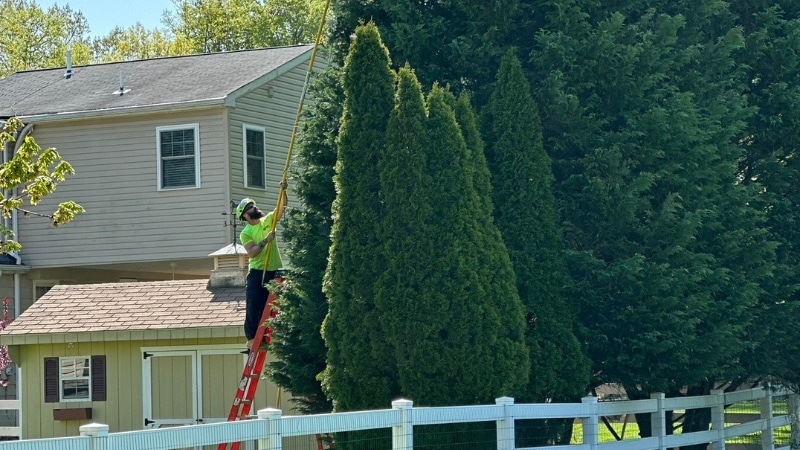
Professional arborists have the proper equipment and safety training for pruning tall trees and evergreens.
Prune Dead, Diseased, or Damaged Branches
Fall pruning in Pennsylvania should concentrate exclusively on removing dead, diseased, and damaged branches (or the 3 D’s). This targeted approach improves tree safety and health without stimulating new growth that could be damaged by early frost.
- Dead Branches: Pose immediate safety risks and provide entry points for insects and diseases. Look for branches that lack leaves, have bark that easily peels away, or feel hollow when tapped.
- Diseased Branches: Often show discoloration, unusual growths, or areas where bark appears sunken or discolored.
- Damaged Branches: Summer storms may cause partial breaks that aren’t immediately obvious. These “hangers” are particularly dangerous during ice storms.
Why Fall is Ideal for Safety Pruning
Removing dead, diseased, and damaged branches in the fall protects both your trees and property from winter storm damage. When ice and snow accumulate on compromised branches, the additional weight can cause catastrophic failures that damage roofs, vehicles, and power lines.
Dead and damaged branches are particularly vulnerable to winter weather loads. Ice storms can add hundreds of pounds of weight to tree branches, and weakened wood simply cannot support this additional stress. By removing these hazards before winter arrives, you eliminate the risk of branch failure during storms.
Fall pruning also allows trees to properly seal wounds before winter dormancy begins. This timing reduces the risk of pest infiltration and disease development that can occur when cuts are made during active growing seasons.
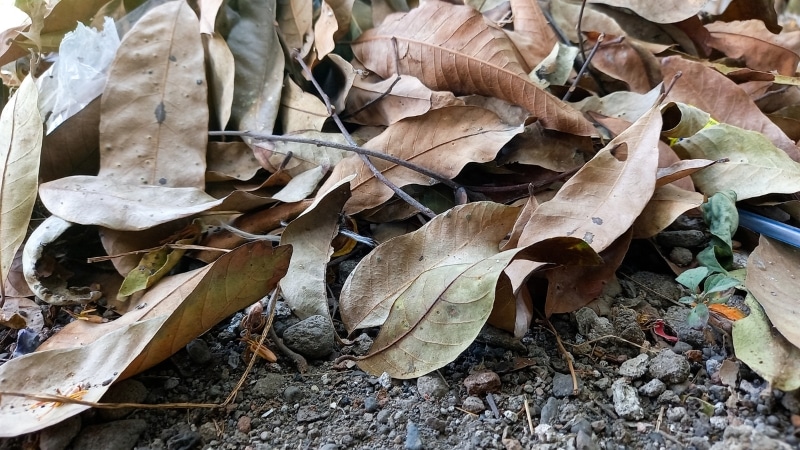
Healthy fallen leaves provide natural mulch and nutrients when left around the bases of trees.
Clear and Manage Fall Leaves
Fall leaf management goes beyond simple yard cleanup. How you handle fallen leaves directly impacts tree health and can indicate underlying problems that require professional attention.
Proper Leaf Disposal Methods
Healthy leaves from disease-free trees make excellent compost or natural mulch when chopped and spread around tree bases. However, leaves showing signs of disease should be removed from the property to prevent spreading pathogens to healthy trees.
Many municipalities in Montgomery and Bucks Counties offer leaf collection programs that turn collected leaves into useful compost for residents. For example, Doylestown Borough provides curbside leaf collection services that vacuum leaves directly from curbside piles, while Chalfont Borough offers specialized leaf collection days using biodegradable bags.
The Pennsylvania Urban and Community Forestry Program provides resources for proper leaf management and composting techniques that benefit both trees and local watersheds.
When Excessive Leaves Signal Tree Problems
While normal fall leaf drop is expected, premature or excessive leaf loss can indicate stress, disease, or pest problems. Trees that drop leaves significantly earlier than others of the same species, or trees with unusual leaf coloration patterns, may need professional evaluation.
Early leaf drop combined with other symptoms, like thinning canopy or dead branches, often indicates serious tree health issues that require immediate attention from Certified Arborists. If you’re concerned about multiple symptoms, read our guide on identifying dying trees to understand when professional intervention is needed.
Assess for Pests and Disease Before Dormancy
Fall provides an excellent opportunity to identify pest and disease damage from the growing season and plan appropriate treatments for the following year.
Identifying EAB Damage and Planning Spring Treatments
Emerald ash borer continues to threaten ash trees throughout Pennsylvania. Fall inspections help identify characteristic damage patterns, including D-shaped exit holes, bark splitting, and canopy thinning, that indicate the presence of EAB.
According to the Pennsylvania DCNR’s EAB management guidelines, early identification is crucial, as infested trees can decline rapidly within 1-4 years of the initial attack.
If you suspect EAB damage, document your findings and schedule a consultation with our Certified Arborists to discuss spring treatment options. Early identification and treatment planning significantly improve treatment success rates.
Fall Disease Assessment for Local Tree Species
Common diseases affecting trees in our region include anthracnose, powdery mildew, and various canker diseases. Fall assessment helps identify which trees suffered disease pressure during the growing season and may need preventive treatments.
Look for unusual leaf spots, premature defoliation, or areas of dead bark that could indicate disease problems. Professional diagnosis ensures appropriate treatment recommendations for the specific diseases affecting your trees.
Scheduling Arborist Consultations for Treatment Planning
Fall consultations allow Certified Arborists to assess current tree health and develop comprehensive treatment plans for the following growing season. This proactive approach ensures treatments are scheduled at optimal times for maximum effectiveness.
Our plant health care specialists can recommend appropriate fungicide applications, soil treatments, and other interventions based on specific tree species and identified problems.
Fertilize and Improve Soil Health
Fall fertilization provides essential nutrients when trees are storing energy reserves for winter dormancy and spring growth. Pennsylvania’s soil conditions and climate make autumn an ideal time for deep root fertilization that supports long-term tree health.
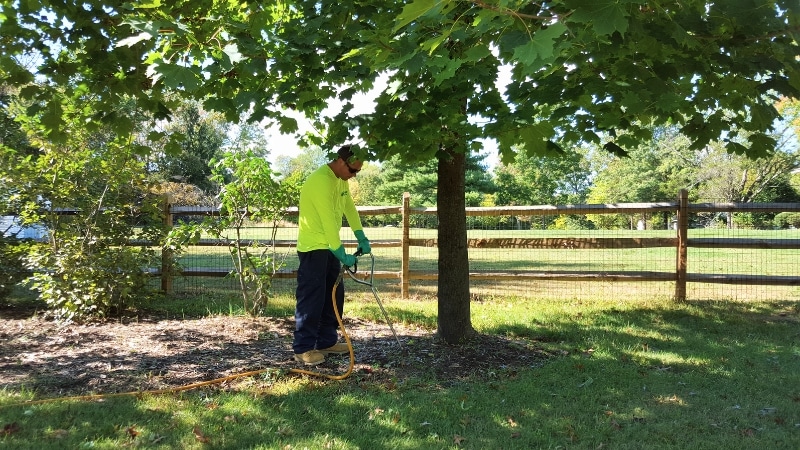
Deep root fertilization in fall delivers nutrients directly to the tree root zones for optimal absorption.
Benefits of Fall Fertilization
Trees use the fall months to move nutrients from leaves to roots and trunk for winter storage. Supplemental fertilization during this period enhances this natural process, providing trees with the resources they need to survive winter stress and emerge strong in the spring.
PRO TIP: Fall fertilization is 3x more effective than spring applications because nutrients have time to reach deep root zones before ground freeze, ensuring maximum absorption when trees need it most.
Fall-applied fertilizers have time to reach deep root zones before the ground freezes, ensuring nutrients are available when trees begin active growth in early spring. This timing also reduces the risk of stimulating late-season growth that could be damaged by early frost.
DIY vs. Professional Fertilization
Homeowners can apply surface fertilizers around smaller trees, but professional deep root fertilization provides superior results for mature trees. Our injection methods bypass competing grassroots and deliver nutrients directly where trees can use them most effectively.
Avoid over-fertilizing with high-nitrogen formulations in fall, as this can stimulate growth that’s vulnerable to winter damage. Professional application ensures proper nutrient balance for fall conditions.
Protect Young and Vulnerable Trees Before Winter
Preparing trees in the fall gives them the best chance to survive Pennsylvania’s harsh freeze-thaw cycles, winter storms, and wildlife pressure. Young trees, in particular, need extra protection in their first few years.
Mulching for Root Protection
Spread 2–3 inches of organic mulch around the base of young trees, extending toward the drip line when possible. Keep mulch a few inches back from the trunk to prevent excess moisture and pest issues. Fresh wood chips, shredded bark, or leaf compost all work well to insulate roots and stabilize soil temperature.
Guarding Against Sun and Wildlife Damage
Trees planted within the last 2–3 years are vulnerable to sunscald, frost cracking, and rodent damage. Wrap trunks with tree wrap or install plastic guards on the south and southwest sides to reduce sunscald. Hardware cloth cylinders around the base deter rabbits and voles from chewing bark during the winter when food is scarce.
Support for At-Risk Mature Trees
Not all vulnerable trees are young ones. Mature trees with weak branch structures may benefit from cabling and bracing before storm season. Clauser’s ISA Certified Arborists evaluate each tree’s structure and install support systems using industry-standard techniques, helping preserve valuable trees that might otherwise be lost in a major storm.
Frequently Asked Questions
When is the best time to prune trees in Pennsylvania?
The best time for major pruning in Pennsylvania is late winter (February-March) while trees are dormant. However, fall is ideal for safety pruning to remove dead, diseased, and damaged branches before storm season. Avoid pruning in late spring and early summer when trees are actively growing.
Should I remove all leaves from around my trees?
No, a moderate layer of healthy leaves provides natural mulch and nutrients for trees. Remove only diseased leaves or excessive accumulations that might harbor pests. Chopped leaves make excellent mulch when spread 2-3 inches deep around tree bases.
How can I tell if my tree needs professional cabling?
Signs that indicate potential need for cabling include visible cracks in major branches, co-dominant stems with weak attachments, and branches that lean significantly or show stress cracks. Any structural concerns warrant professional evaluation by a Certified Arborist.
What fall signs indicate my ash trees may need spring EAB treatment?
Look for D-shaped exit holes in the bark, vertical bark splits, increased woodpecker activity, and canopy thinning that starts from the top down. If you notice these signs, schedule a consultation immediately to discuss spring treatment options while trees are still viable candidates.
Is fall a good time for tree removal?
Fall can be an excellent time for tree removal, especially for trees that pose safety risks during winter storms. Dormant season removal causes less stress to surrounding plants, and scheduling removal before winter ensures dangerous trees don’t cause storm damage.
How do I prepare my trees for Pennsylvania winters?
Key winter preparation includes applying mulch around tree bases, wrapping young tree trunks, removing dead or damaged branches, and ensuring adequate fall watering before the ground freezes. Professional assessment helps identify trees needing structural support before winter weather arrives.
Get Professional Fall Tree Care from Clauser
Fall tree care sets the foundation for healthy, safe trees throughout Pennsylvania’s challenging winter months. While homeowners can handle basic inspection and small maintenance tasks, professional assessment and care ensure your valuable trees receive appropriate treatment for long-term health and safety.
Clauser Tree Care has served Montgomery and Bucks County communities since 1994, providing expert tree care with the friendly, reliable service that has made us a trusted neighbor throughout Doylestown, Chalfont, Ambler, and surrounding areas. Our ISA Certified Arborists bring three decades of local experience to every project, and we treat your property like it’s our own.
Don’t wait until winter storms threaten your trees and property. Call 215-542-8291 or request your free estimate to schedule fall tree care services that protect your investment and ensure safety for your family and neighbors.
About Clauser Tree Care
From who you talk to on the phone in our office, to our courteous and experienced work crews who provide your service, all of the hard-working team members at Clauser Tree Care strive for complete client satisfaction. Our job is simply not done until you are pleased with the experience that you have had working with our company. Founded more than 25 years ago on the principles of honest work and arboricultural best practices, we strive for a higher standard of care for a greener future.